Trying to choose between an older Caseyville street and a newer subdivision? That decision can feel simple at first, but once you start comparing lot sizes, commute patterns, neighborhood layout, and monthly costs, the differences become more important. If you are moving on a tight timeline or simply want to make a smart long-term choice, understanding how Caseyville is built can save you time and stress. Let’s break down what established neighborhoods and newer developments in Caseyville really offer.
Caseyville’s layout tells the story
Caseyville sits in St. Clair County, about 11 miles east of downtown St. Louis. According to the Village of Caseyville’s annual comprehensive financial report, the village covers about 7.42 square miles and had 4,400 residents in the 2020 census. That same report ties Caseyville’s growth pattern closely to the I-64 corridor, which helps explain why some parts of town feel older and more village-like while others feel more planned and suburban.
That split is not accidental. Caseyville’s zoning code is designed to preserve existing neighborhoods while also allowing new single-family housing in more structured formats. In practical terms, that means you should expect real differences between older streets and newer plats instead of assuming every part of Caseyville will feel the same.
Established neighborhoods in Caseyville
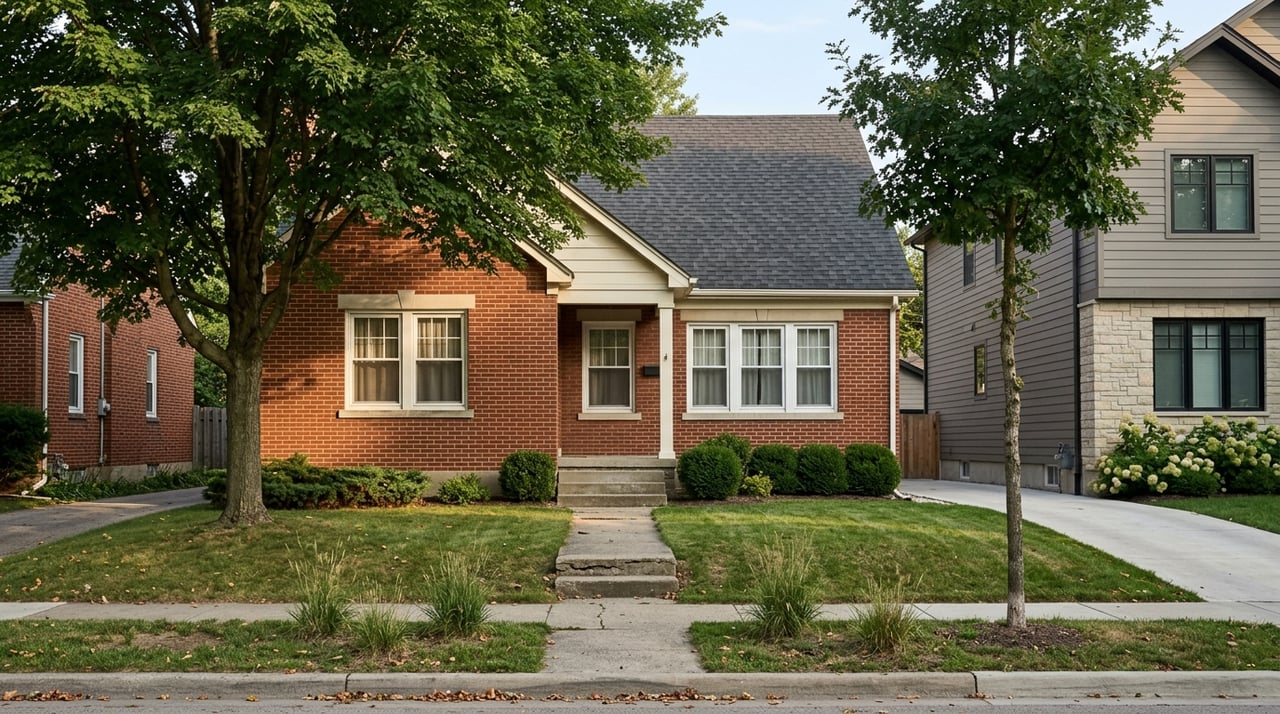
Established Caseyville neighborhoods often feel more varied from one block to the next. The village code says the SR-1 and SR-2 single-family residence districts are intended to stabilize and preserve established neighborhoods developed at varying densities. These districts are built around detached single-family homes, but the standards still allow a more compact pattern than many newer subdivisions.
SR-1 requires a minimum lot area of 7,500 square feet, while SR-2 requires 5,000 square feet. Both districts require minimum lot widths of 50 feet and minimum lot depths of 75 feet. New residential structures in these districts also require paved driveways.
What matters most for you is how much variation you may find. Public listing examples on older Caseyville streets show homes built in 1938, 1943, and 1951 on lots ranging from roughly 0.47 acres to 1.54 acres. Another North Illinois Street listing shows a 672-square-foot home on a 1.11-acre lot.
That means an established neighborhood in Caseyville may not follow one neat formula. You could find a smaller mid-century home on a large parcel, a modest home near long-established streets, or a mix of home sizes and lot shapes on the same road. If you like character and flexibility, that can be appealing.
What older streets may offer
Older Caseyville streets may appeal to buyers who want:
- More variety in home age and design
- The possibility of larger legacy lots
- A less uniform neighborhood layout
- Detached single-family homes in long-established areas
That said, older areas can also come with more unknowns. The village’s annual report notes replacement of old 8-inch water mains on the south side of Hollywood Heights Road and mentions demolition of derelict properties. A safe takeaway is that infrastructure age and maintenance expectations may vary more on established streets than in newer developments.
Newer developments in Caseyville
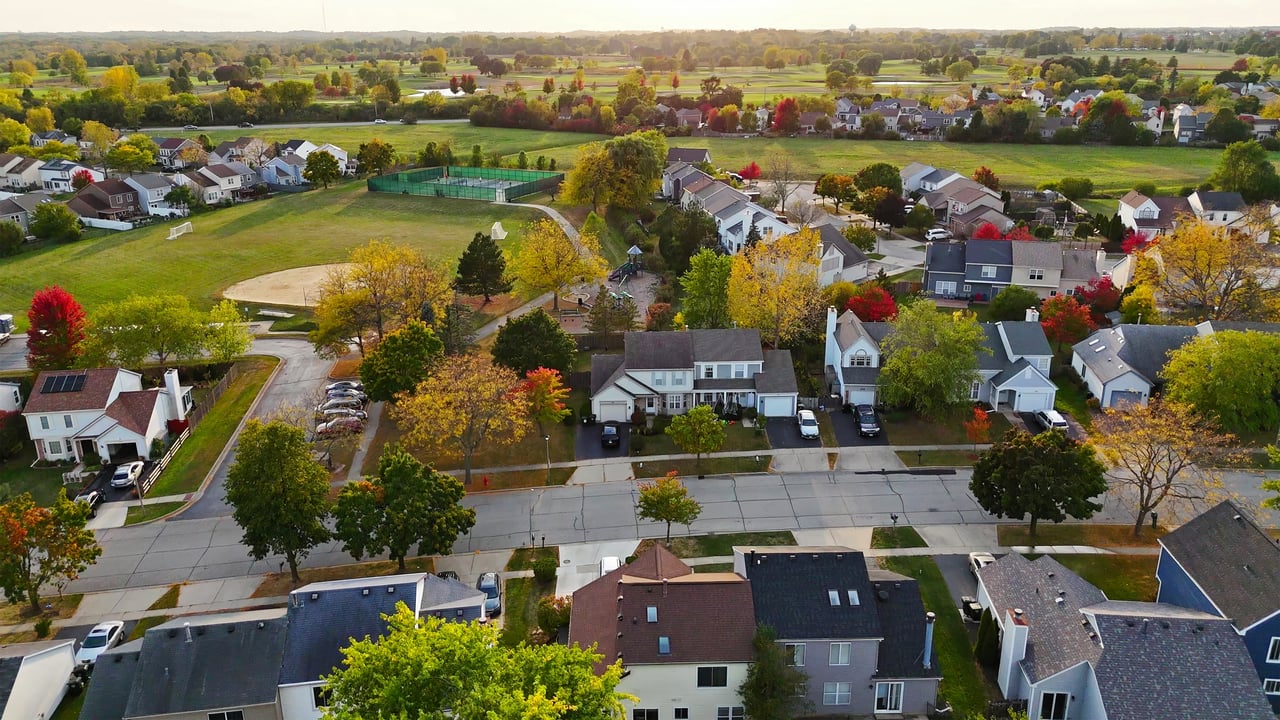
Newer developments in Caseyville usually follow a more deliberate plan. The village’s planned residential development rules are more specific than the standards for many established neighborhoods. For buyers, that often translates into a more consistent neighborhood feel.
Under Caseyville’s code, the minimum lot size for a single-family home in a Planned Residential Development must average at least 10,500 square feet. These developments also require common open space, legally enforceable homeowner or property-owner association provisions, landscaping, underground utility lines, public water, sanitary sewer service, and paved driveways for new residential structures.
In simple terms, newer developments tend to feel more standardized. You may see more consistent lot layouts, more shared rules, and a neighborhood design that was planned as one whole project instead of growing over many decades.
A local example of newer development
One local example is the Woodlands at Far Oaks area near Far Oaks Golf Club on Old Collinsville Road. The golf club’s official site says it is in Caseyville and opened in 1998. Public listing descriptions for the Woodlands at Far Oaks describe a community of 119 homes on oversized lots with lot widths around 110 feet, with recent examples of custom-built two-story homes on about 0.31 to 0.40 acres.
That profile is helpful because it shows what many buyers picture when they think of newer development. The homesites are more deliberate, the neighborhood framework is more uniform, and the overall setting can feel more polished from the start.
Established versus newer at a glance
If you want the quickest way to compare the two, this table can help.
| Feature | Established neighborhoods | Newer developments |
|---|---|---|
| Overall feel | More varied and character-driven | More planned and uniform |
| Lot patterns | Can vary widely by parcel | More standardized overall |
| Home age | Often older or mid-century | Typically more recent |
| Rules and restrictions | May vary by property and zoning | More likely to include association rules and covenants |
| Utilities and infrastructure | May reflect older systems in some areas | Often includes underground utilities and newer service standards |
| Outdoor layout | Can include unusual lot shapes or larger legacy parcels | Often designed around consistent subdivision planning |
What matters most for PCS movers
If you are relocating for military service, the right fit often comes down to predictability, commute, and carrying costs. Caseyville’s location along I-64 makes road access a big part of daily life. The Village of Caseyville identifies the community as tied to the I-64 corridor, and official directions to Scott Air Force Base rely on I-64 along with IL-158, Air Mobility Drive, and local connector roads.
That means your commute experience may depend less on whether a home is old or new and more on how quickly you can reach I-64 or the IL-157 and IL-158 corridor. A home that looks great online can feel very different once you map the actual route you will drive most days.
IDOT also posted a notice on April 24, 2026, about westbound I-64 lane closures in Caseyville between Illinois 159 and Illinois 157. For a PCS move, that is a reminder to look beyond straight mileage. You want to know how your route works during real traffic conditions and road work periods.
Why newer areas may feel easier
For some military families, newer developments offer a sense of predictability that helps during a compressed timeline. Common open-space rules, landscaping standards, and association provisions can make the neighborhood feel more consistent. If you are trying to buy quickly from out of area, that structure may simplify your decision.
Why established areas may still win
For other buyers, established streets can offer better parcel variety and more unique home options. You may find a larger lot, a different layout, or a property that gives you more space than you expected. If you are willing to evaluate homes one by one, an older area may offer strong value and flexibility.
Costs to verify before you decide
No matter which style of neighborhood you prefer, do not assume two similar-looking homes will carry the same monthly cost. In Caseyville, taxes, lot details, and subdivision rules can vary by parcel. That is especially important when you are trying to set a realistic housing budget.
The St. Clair County assessor says property taxes are based on assessed value and the rates set by taxing authorities such as school and fire districts. That means your tax bill can differ even if two homes are close together. A newer subdivision and an older street may also come with different ownership rules and recorded restrictions.
The St. Clair County recorder’s office says lot size is best verified through the subdivision plat in newer subdivisions and the assessor’s property record card. So before you rely on a map view or listing summary, confirm the legal lot details and any recorded subdivision documents.
How to choose the right Caseyville fit
The best choice usually comes down to how you live, not just what looks newer. An established neighborhood may suit you if you want more lot variety, older housing stock, or a less uniform setting. A newer development may fit better if you prefer a more planned environment with clearer structure and a more predictable neighborhood layout.
As you compare homes, focus on the details that affect daily life:
- Drive time to I-64 and key connector roads
- Lot size and lot shape
- Home age and likely maintenance items
- Recorded subdivision rules or association provisions
- Property tax differences by parcel
- Utility and infrastructure context
Caseyville is not a one-size-fits-all market. Older streets can have surprisingly large lots, and newer developments can still offer substantial homesites. The smartest move is to verify each property on its own merits instead of assuming the street name tells the whole story.
If you want help comparing Caseyville neighborhoods through a military relocation lens, reach out to Christina Johnson. You can get connected with a vetted, military-experienced real estate professional who understands tight timelines, commute priorities, and the details that matter most during a PCS move.
FAQs
What is the difference between established neighborhoods and newer developments in Caseyville?
- Established Caseyville neighborhoods are generally more varied in home age, lot size, and layout, while newer developments are typically more planned, more uniform, and more likely to include shared rules and common open-space features.
Are lot sizes larger in older Caseyville neighborhoods or newer developments?
- It depends on the property. Older Caseyville streets can include large legacy parcels, while newer planned developments must average at least 10,500 square feet for single-family lots under village rules.
Do newer Caseyville developments usually have homeowner association rules?
- Planned Residential Developments in Caseyville require legally enforceable homeowner- or property-owner-association provisions, so newer developments are more likely to include recorded rules and shared-space structures.
What should PCS buyers check before buying a home in Caseyville?
- PCS buyers should compare commute access to I-64 and the IL-157 or IL-158 corridor, verify lot size and plat details, review any subdivision rules, and confirm property taxes and likely maintenance needs for the specific parcel.
How can property taxes differ between Caseyville homes?
- According to the St. Clair County assessor, property taxes depend on assessed value and the tax rates set by local taxing authorities, so two homes that seem similar can still have different monthly carrying costs.
Why does Caseyville have both older and newer neighborhood patterns?
- Caseyville’s long history, its incorporation in 1869, and its development along the I-64 corridor helped create a mix of long-established residential streets and newer planned subdivisions, and the village zoning code supports both patterns.